 Skip to content


Choosing a Main Contractor for a School Project in the Western Cape
School projects bring live-site access, programme and safety constraints that should be part of contractor selection from the start.
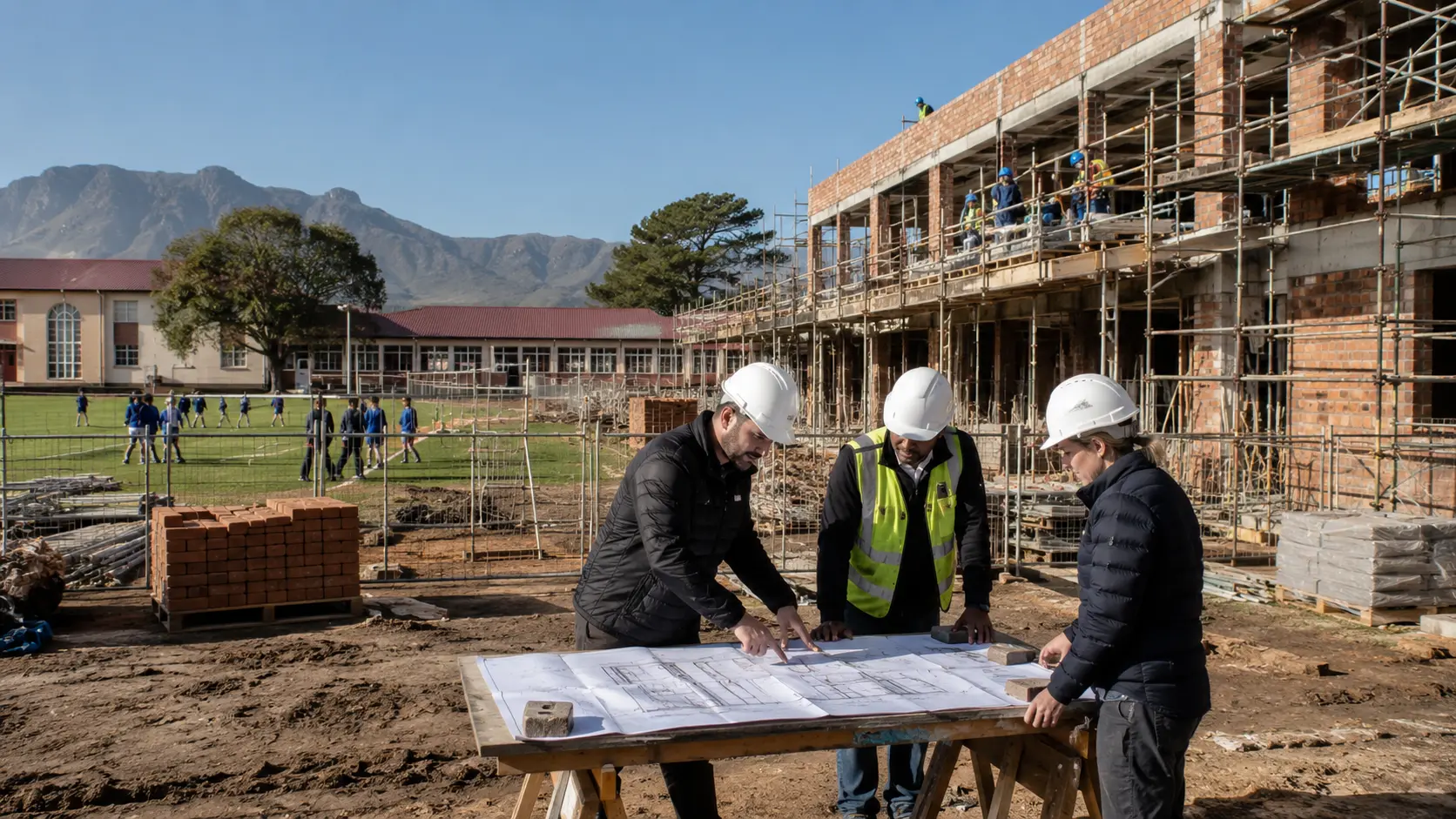
A school project is not simply a commercial building with smaller occupants. The construction team often has to work around classes, exams, sports, staff access, school holidays and a site that cannot be handed over completely to the contractor.
For that reason, contractor selection should look beyond the price on the tender return.
Ask how the contractor intends to separate construction from school activity
The practical question is how people, deliveries and work areas will be controlled. A good plan should deal with access routes, temporary barriers, noisy work, material deliveries and the times when learners or staff are close to the construction zone.
The answer does not need to be complicated. It does need to show that the contractor has thought about the school as a live environment rather than an empty site.
Programme matters more when the calendar is fixed
Schools have immovable dates. The December holiday ends when it ends. A hall may be needed for an event. A sports facility may need to be available for a season.
A useful contractor programme therefore works backwards from those constraints and identifies the decisions, procurement and inspections needed to protect the key dates.
Look at communication structure
School projects usually involve more than the client and contractor. The principal, governing body, architect, quantity surveyor, project manager and specialist consultants may all have input.
That makes clear communication important. Site instructions, cost changes and programme decisions should move through agreed channels so that the school is not caught between different versions of the same instruction.
Check whether the contractor can work around partial access
Some projects can close a wing or external area while the rest of the campus remains operational. Others require work to be split into phases.
The contractor should be able to explain how labour, storage and deliveries will be adjusted as the available work area changes. On a live school site, logistics are part of the build.
Handover should be planned, not rushed at the end
Where a school has a fixed reopening date, the last weeks can become compressed. Finishes, commissioning, cleaning, snagging and close-out documentation all need space in the programme.
A contractor who treats handover as a stage of construction rather than the moment when tools leave site is better placed to finish properly.
PDK’s experience on education projects reinforces a simple point: the successful job is the one where construction is organised around the school’s real operating constraints, not only around the drawings.
