 Skip to content


Civil Works Before the Building Starts: Drainage, Levels and Access
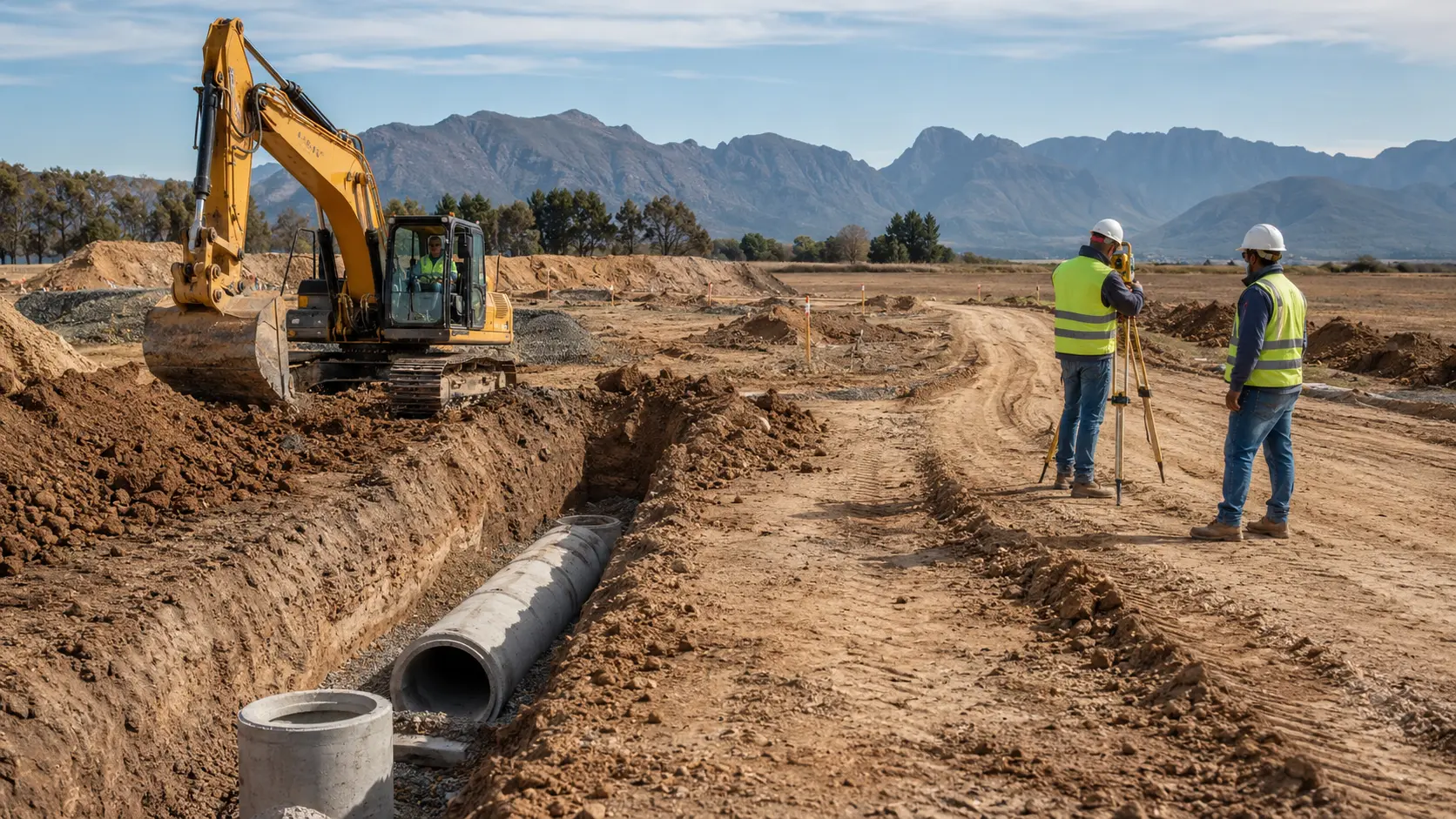
The early civil package sets up drainage, access and levels the rest of the build depends on. Getting those basics right makes the building work easier.
The first visible building elements often get the attention, but a large part of the site has already been decided by then. Access, excavation, levels, drainage and underground services shape how the rest of the project can proceed.
When the early civil work is organised properly, the building team inherits a site that makes sense. When it is not, later trades spend time working around problems that were created at the beginning.
Set levels before excavation becomes production
Site levels affect foundations, platforms, roads, paving and stormwater. On sloped sites they also affect retaining requirements and the amount of material that must move.
Levels should be checked against the broader site design, not only against one building footprint. A platform that works in isolation can create a drainage problem at the boundary if the external works have not been considered.
Plan where water will go
Stormwater does not wait for the project to be finished. Construction itself changes how water moves across a site.
Temporary and permanent drainage need to be considered early enough that excavations, stockpiles and access roads do not channel water into the wrong areas.
Access roads are part of production
Concrete trucks, delivery vehicles and plant need a route that can cope with the work. If access breaks down after rain or conflicts with excavation areas, the effect spreads into the programme quickly.
Temporary access does not have to be the final road, but it should be planned with enough thought that the site can function safely and consistently.
Coordinate underground services before hard surfaces
Drainage, sleeves, ducts and other below-ground services should be coordinated before paving or slabs close the area.
Opening completed work to install something that was known about earlier is expensive and avoidable. The civil stage is where that coordination should happen.
Earthworks need somewhere to go
Excavated material may be suitable for reuse, unsuitable for fill or simply more than the site can accommodate. The handling plan affects plant movement, stockpiles and disposal.
On tight sites this becomes a logistics issue as much as an earthworks issue.
Finish the early package to a usable standard
The civil team is not only preparing the site for itself. The next trades need accurate levels, clean working areas and access that remains usable.
A well-executed civil package reduces friction for the structural and building work that follows. The job starts to run better before the walls are even out of the ground.
