 Skip to content


Commercial Renovations: How to Keep Operations Moving During Construction
Working in an occupied commercial property requires phasing, access control and a programme built around the client’s operating hours.
A commercial renovation is rarely judged only by the finished space. The client also remembers what happened to the business while construction was under way.
If staff, customers, deliveries or production still need to move through the property, the construction plan has to protect those activities as far as reasonably possible.
Start with the operating constraints
Before sequencing the build, understand the client’s working day. When are customers present? When do deliveries arrive? Which entrances must remain open? Are there areas that cannot lose power or water during trading hours?
Those constraints become part of the programme. They are not details to sort out once the contractor is already on site.
Phase the work around usable zones
Where possible, divide the project into clear work areas so construction and normal operations do not occupy the same space unnecessarily.
A phased approach may take more coordination than closing the entire property, but it can be the difference between a manageable refurbishment and a business that cannot function.
Schedule shutdowns deliberately
Electrical, plumbing, fire or data work can require temporary shutdowns. The main contractor should coordinate these with the client and specialist trades rather than allowing each subcontractor to interrupt services independently.
Where after-hours work is justified, it should be planned around the activities that genuinely need it. Not every task becomes better just because it happens at night.
Dust, noise and access need physical controls
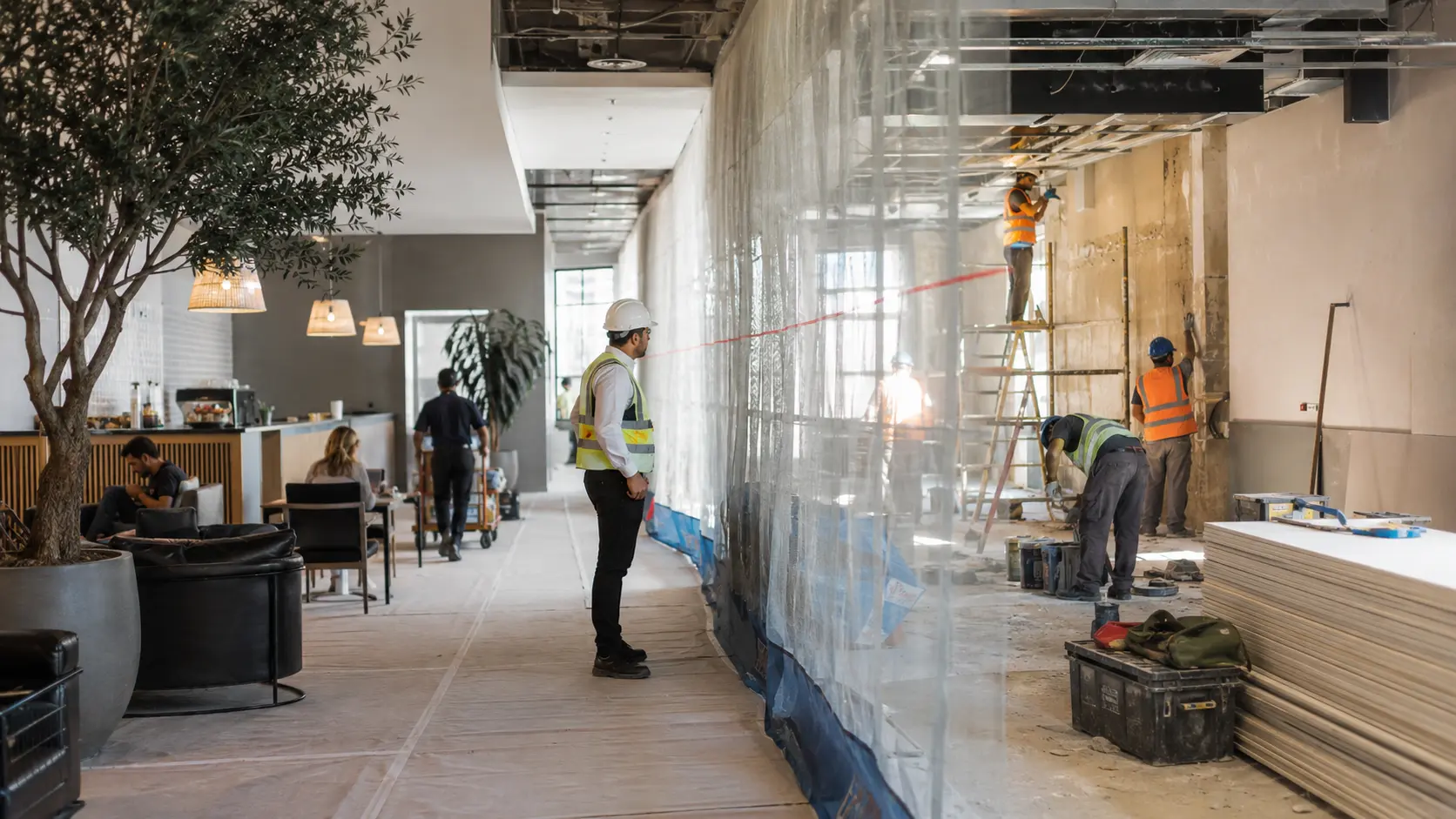
Temporary screens, protected routes, signage and housekeeping are practical site tools. They help separate construction activity from staff and visitors and reduce the amount of cleaning and disruption carried into occupied areas.
The condition of those temporary controls needs checking throughout the job. A screen that worked in week one may be in the wrong place once the work moves into the next phase.
Keep the client informed about what changes next
Commercial clients need enough notice to brief staff and adjust operations. A short weekly look-ahead can be more useful than a long report issued after the fact.
What matters is knowing which area will be affected, what access will change, what shutdown is planned and what the client needs to do before the work starts.
Allow proper time for handover and reopening
The final days should include testing, cleaning, snagging and making the area safe for normal use. Rushing directly from active building work into a public opening usually creates unnecessary pressure.
A commercial renovation works best when the contractor treats the client’s operations as part of the site environment. The construction still has to be built correctly, but the route to that finished result matters too.
