 Skip to content


Building a New Home in Somerset West: What to Sort Out Before Site Establishment
A practical look at the information, access, drawings and early site decisions worth sorting out before a new residential build starts.
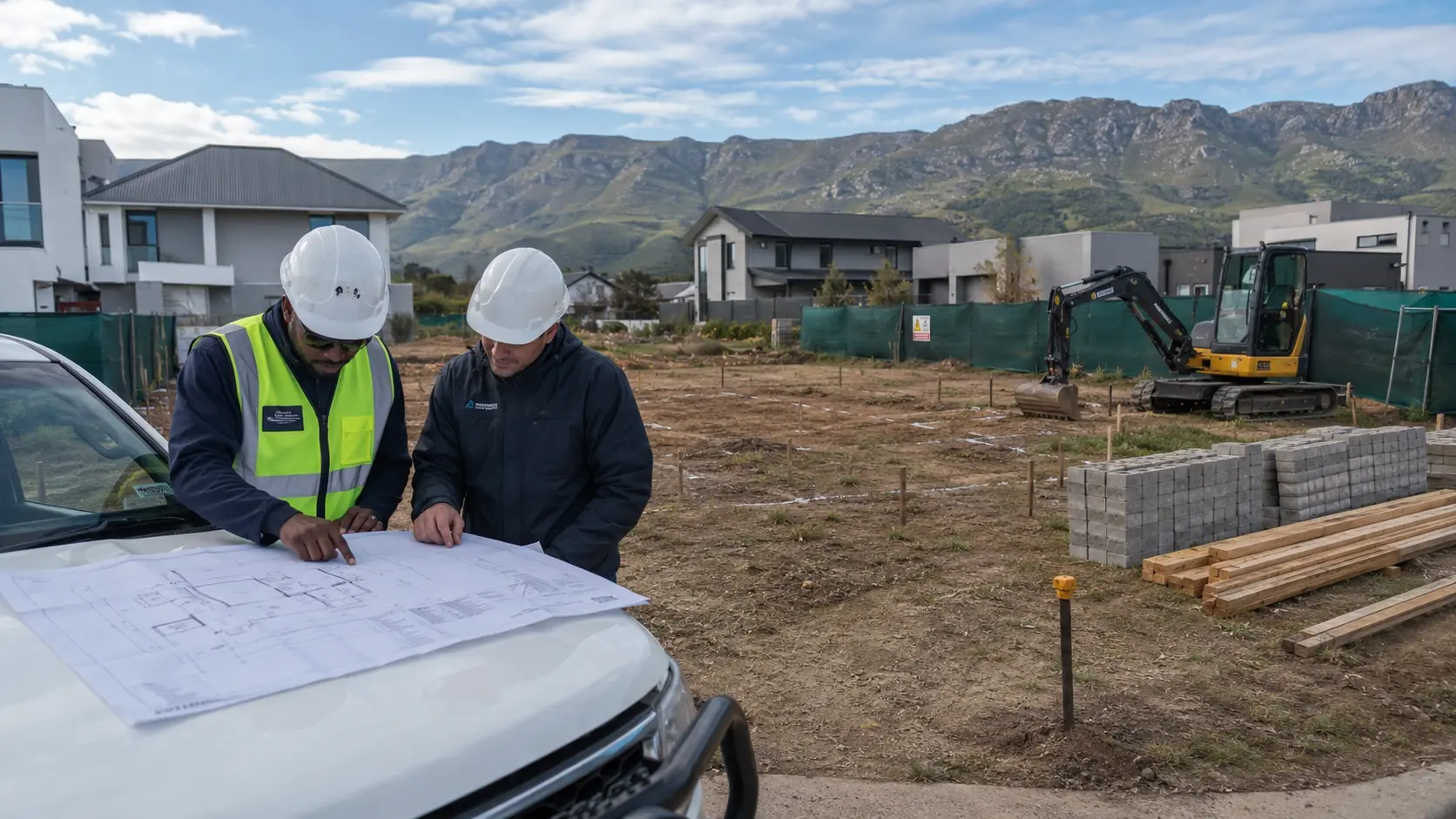
A new home starts long before the first excavation. By the time a team arrives to establish site, several decisions should already be clear enough that the job can move rather than wait.
That matters in Somerset West and the wider Helderberg because residential sites vary sharply. One erf may have easy road access and generous working space. The next may sit on a slope, inside an estate, between existing homes or behind restricted access. The drawings can be similar while the site setup is completely different.
Start with the information the site team actually needs
Approved drawings are the obvious starting point, but they are not the whole construction package. Structural information, levels, service positions, specifications and any estate or access requirements can affect how the first weeks are planned.
If information is still outstanding, that does not automatically mean the whole project must stop. It does mean the missing decisions should be identified early and sequenced properly. Starting blindly and hoping the paperwork catches up is usually where rework begins.
Access is part of the construction plan
A contractor needs to know how labour, deliveries, concrete, plant and waste will move in and out. A narrow driveway, steep stand or busy residential road changes the practical plan.
Good access planning answers simple questions before they become site problems: where materials can be offloaded, what may need to be craned or carried, where skips can stand, whether neighbours or estate management need notice, and how the site will stay secure after hours.
Levels and drainage deserve early attention
Residential clients naturally focus on rooms, finishes and the final look of the house. The first site conversations are often more basic: levels, stormwater, excavation, retaining conditions and where water will go once hard surfaces are built.
Those items influence foundations, external works and the relationship between the finished house and the surrounding ground. They are not glamorous, but they are expensive to correct after the fact.
Be clear about what the quotation includes
Before construction starts, the scope should be understandable to both sides. That includes more than the headline contract amount. Clarify exclusions, client-supplied items, provisional allowances, specialist appointments and what information still has to be issued.
This is especially important on detailed homes where the specification develops as the project moves. A clear commercial basis does not prevent changes. It makes changes easier to price and manage when they happen.
Give the programme something solid to work with
A construction programme is only useful if the decisions feeding it arrive when they are needed. Long-lead items, specialist fabrication, imported finishes or client selections can all sit far ahead of the physical work on site.
The best time to identify those items is before site establishment, not when the team reaches the point where they are required.
PDK approaches residential work as a sequence of practical decisions: understand the stand, establish the scope, plan access and early works, then keep information moving ahead of construction. That gives the site team the best chance of building without unnecessary stop-start delays.

